
Trichlor vs. Dichlor: Which Chlorine Tablet Is Right for Your Pool?
Walk into any pool supply store and you'll see shelves full of chlorine tablets — but not all of them are the same. Trichlor and Dichlor are two different compounds that both sanitize your pool, but they behave differently in the water, suit different pool types, and have different long-term effects on your water chemistry.
If you've ever grabbed a bucket of tablets without knowing what's actually in them, this guide is for you.
What Is Trichlor?
Trichlor (short for trichloroisocyanuric acid, or TCCA) is the most common type of chlorine tablet for residential pools. Those familiar 3-inch tablets you see everywhere? Almost certainly Trichlor.
Key characteristics:
- Available chlorine: ~90%
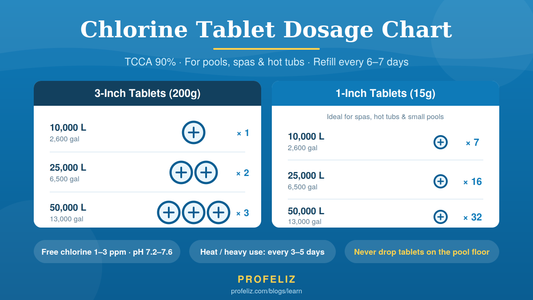
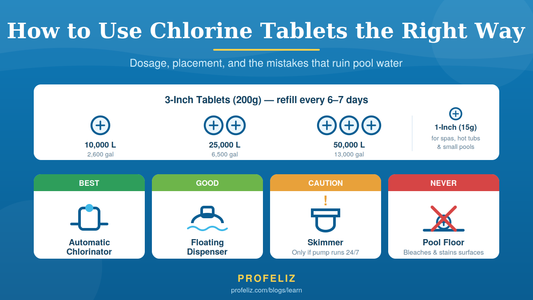
- Dissolve rate: Slow — designed to dissolve over 5–7 days
- pH: Very low (~2.8–3.0) — will gradually lower your pool's pH over time
- Contains CYA: Yes — each tablet adds cyanuric acid (stabilizer) to your water
- Best for: Outdoor in-ground and above-ground pools
Because Trichlor dissolves slowly and contains its own stabilizer, it's ideal for outdoor pools exposed to UV sunlight. The CYA in each tablet protects the chlorine from breaking down too quickly in the sun, giving you consistent sanitization throughout the week.
The tradeoff: CYA accumulates over the season. If you use Trichlor tablets exclusively, you'll need to monitor CYA monthly and partially drain and refill your pool if it climbs above 80 ppm.
What Is Dichlor?
Dichlor (short for sodium dichloroisocyanurate) also contains cyanuric acid, but it's a different compound with different properties. It typically comes in granular or smaller tablet form, and it dissolves much faster than Trichlor.
Key characteristics:
- Available chlorine: ~55–62%
- Dissolve rate: Fast — dissolves within hours
- pH: Near neutral (~6.8–7.0) — minimal impact on pool pH
- Contains CYA: Yes, but less than Trichlor per dose
- Best for: Spas, hot tubs, small above-ground pools, or situations requiring a quick chlorine boost
Because Dichlor dissolves quickly and has a near-neutral pH, it's the go-to for spas and hot tubs where you need fast, precise dosing without destabilizing the water chemistry. It's also useful when you want to quickly raise chlorine levels without waiting days for a tablet to dissolve.
Side-by-Side Comparison
| Property | Trichlor | Dichlor |
|---|---|---|
| Available chlorine | ~90% | ~55–62% |
| Form | 3-inch or 1-inch tablets | Granules or small tablets |
| Dissolve rate | Slow (5–7 days) | Fast (hours) |
| pH | ~2.8–3.0 (acidic) | ~6.8–7.0 (near neutral) |
| Contains CYA | Yes | Yes (less per dose) |
| Best for | Outdoor pools | Spas, hot tubs, small pools |
| Cost per dose | Lower | Higher |
| Long-term CYA buildup | High | Moderate |
Which One Should You Choose?
Choose Trichlor if you have an outdoor swimming pool.
For standard backyard pools — whether in-ground or above-ground — Trichlor is the better long-term choice. The slow-dissolving formula means you add tablets once a week and let them work. The built-in CYA protects your chlorine from UV degradation, so you're not burning through product faster than it can sanitize.
Just stay on top of your CYA levels. Test monthly, keep it between 30–50 ppm, and dilute with fresh water if it creeps above 80 ppm.
Choose Dichlor if you have a spa, hot tub, or very small pool.
Hot tubs and spas have much smaller water volumes and higher temperatures, which means chlorine gets consumed faster and dosing precision matters more. Dichlor's fast dissolve and neutral pH make it a better fit for these environments. It's also a good choice for a quick chlorine top-up without committing to a slow-dissolving tablet.
A note on mixing: Never mix Trichlor and Dichlor together directly — combining different chlorine compounds can cause a violent chemical reaction. Add them separately, and always let one fully dissolve before adding the other.
What About CYA in Both Products?
Both Trichlor and Dichlor contain cyanuric acid, which means CYA will accumulate in your water regardless of which you use. The difference is rate and volume:
- Trichlor tablets contribute more CYA per dose due to higher chlorine content and usage frequency
- Dichlor adds less CYA per application but gets used up faster, so the net effect is similar over a full season
If your CYA is already high (above 70 ppm), consider switching temporarily to unstabilized chlorine (liquid chlorine or cal-hypo shock) while you dilute your pool water down. Adding more stabilized chlorine on top of high CYA leads to "chlorine lock" — where your sanitizer stops being effective even at normal ppm readings.
For a full breakdown of CYA and how to manage it, see our guide: What Is CYA and Why Does It Matter?
Frequently Asked Questions
Can I use Trichlor in a hot tub?
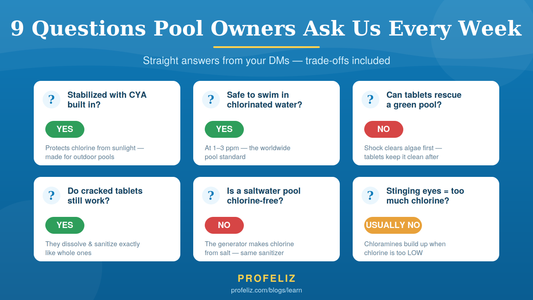
It's not recommended. Trichlor's slow dissolve rate and very low pH can throw off hot tub chemistry quickly. The small water volume of a hot tub means pH changes happen fast. Dichlor or non-stabilized options are better suited for spas.
Does Trichlor raise CYA?
Yes. Every Trichlor tablet adds a small amount of cyanuric acid to your pool. Over a full season of regular use, CYA will accumulate — which is why monthly testing is important. Keep CYA between 30–50 ppm for outdoor pools.
Can I mix Trichlor and Dichlor?
Never mix them directly. Both are chlorine compounds, but combining different chlorine products can cause a dangerous chemical reaction. Add them at separate times and let one fully dissolve before introducing the other.
Which is cheaper — Trichlor or Dichlor?
Trichlor is generally more cost-effective per dose because of its higher available chlorine content (~90% vs ~56%) and slower dissolve rate. You use less product over time. Dichlor tends to cost more per application and is better reserved for specific use cases like spas.
What type of chlorine is in Profeliz tablets?
Profeliz uses 99% Trichloro-S-Triazinetrione (Trichlor) with 90% available chlorine — professional-grade formula in a convenient slow-dissolving 3-inch tablet.
Bottom Line
For most pool owners with a standard outdoor pool, Trichlor is the right choice — it's cost-effective, convenient, and built for consistent week-long sanitization. If you have a spa or hot tub, or need a fast chlorine boost, Dichlor is the better tool for the job.
Not sure how to actually use Trichlor tablets once you have them? Read our step-by-step guide: How to Use Chlorine Tablets in Your Pool →
Tags:
Previous
How to Use Chlorine Tablets in Your Pool (Step-by-Step Guide)
Next
How to Open Your Pool for Summer: A Complete Checklist